
Restorative Dentistry focuses on repairing damaged teeth and replacing missing ones to bring back proper function and comfort.
In Pakistan, oral health problems are widespread because many people avoid regular checkups and only visit a dentist when pain becomes severe.
Studies show that over 70% of adults in the country experience untreated cavities, while gum disease and tooth loss are common in both rural and urban communities.
Everyday habits such as high sugar intake, frequent tea consumption, smoking, and chewing gutka also contribute to dental damage.
When dental issues are left untreated, they often lead to serious complications like infections, tooth loss, and difficulty in eating.
Restorative dentistry helps prevent these outcomes by offering solutions such as fillings, crowns, bridges, implants, and root canals.
These treatments not only restore teeth but also improve chewing ability, relieve pain, and prevent future oral health problems.
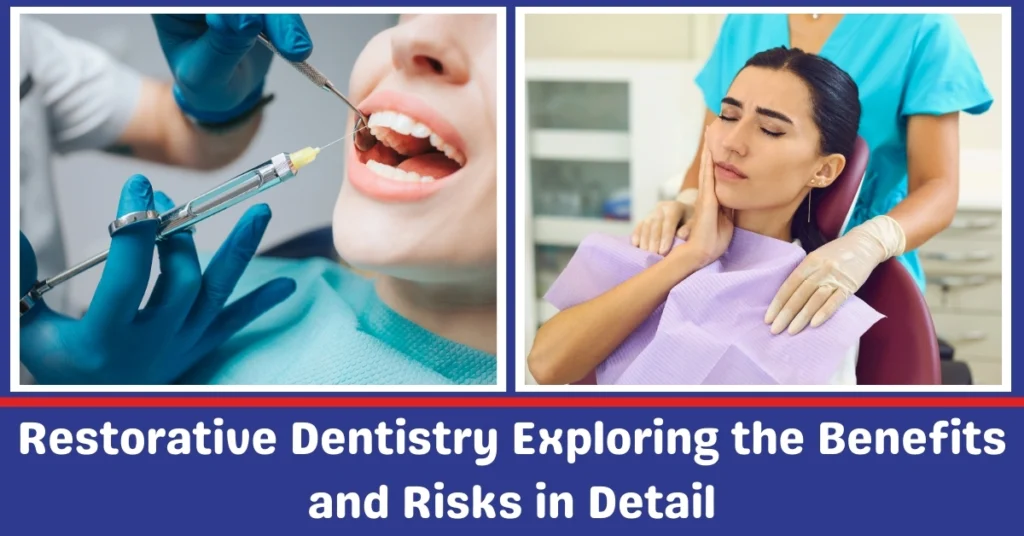
Restorative Dentistry Exploring the Benefits and Risks in Detail
In this guide we will explain the complete benefits, risks, and real-life importance of Restorative Dentistry in Pakistan.
1. What is Restorative Dentistry?
Restorative dentistry is a branch of dental care that focuses on repairing or replacing damaged, decayed, or missing teeth.
The goal is to restore the natural function of the mouth so that people can chew, speak, and smile without pain or difficulty.
In restorative dentistry, dentists use various techniques and tools to bring back the strength, shape, and stability of teeth.
Common procedures include dental fillings for cavities, crowns for broken teeth, bridges to replace missing teeth, root canal treatment to save infected teeth, dental implants to replace lost teeth permanently, and dentures for multiple missing teeth.
These treatments are not only about appearance; they help maintain oral health and prevent further complications.
In Pakistan, where oral hygiene is often overlooked, restorative dentistry plays a vital role in maintaining overall health.
Many people delay dental visits until the pain becomes unbearable, leading to serious problems.
Restorative dentistry provides solutions to these issues, helping people regain normal function and avoid future health risks.
2. Why Restorative Dentistry is Important in Pakistan
Restorative dentistry holds significant importance in Pakistan due to the high prevalence of dental issues across the population.
A large number of people in both urban and rural areas suffer from tooth decay, gum infections, and missing teeth.
Poor dietary habits, high sugar consumption, frequent intake of tea, smoking, and use of substances like gutka and paan contribute to widespread oral health problems.
Another major issue is the lack of awareness about regular dental checkups. Many people visit the dentist only when there is severe pain or visible damage.
This delay often results in more complex dental issues that require advanced treatments. Restorative dentistry helps address these problems by repairing teeth before they are lost completely.
In Pakistan, dental problems can also impact overall health. Infections in the mouth can spread to other parts of the body, affecting the heart and increasing the risk of conditions like diabetes.
Restorative dentistry helps prevent such complications by treating infections and restoring proper oral function. It also improves the ability to chew food properly, which supports better digestion and nutrition.
Restorative dentistry is not only about fixing damaged teeth but also about improving the quality of life.
It helps people eat comfortably, speak clearly, and smile with confidence. This makes it an essential part of healthcare in Pakistan. Visit for best dental treatment at Zainab Dental Clinics, Islamabad, PWD.
3. Benefits of Restorative Dentistry
Restorative dentistry offers several practical benefits, especially for people in Pakistan who suffer from common dental issues.
These benefits are directly related to improved oral health, better functionality, and enhanced daily life.
Pain Relief and Comfort
One of the most immediate benefits of restorative dentistry is relief from pain. Tooth decay, infections, or broken teeth can cause severe discomfort.
Treatments like fillings, root canals, and crowns remove the source of pain and restore comfort.
Preservation of Natural Teeth
Restorative dentistry focuses on saving natural teeth whenever possible.
Instead of extracting a damaged tooth, procedures like root canal treatment can remove the infection and keep the original tooth in place. This helps maintain natural alignment and chewing ability.
Improved Chewing and Digestion
Missing or damaged teeth can make it difficult to chew food properly. This affects digestion and overall nutrition.
Restorative treatments like crowns, bridges, and implants restore proper chewing function, allowing people to eat a balanced diet without discomfort.
Prevention of Further Damage
By treating cavities, cracks, or infections early, restorative dentistry prevents more serious problems in the future.
For example, a simple filling can stop tooth decay from spreading deeper, avoiding the need for more complex treatments later.
Better Oral Health
Restorative dentistry also supports better oral hygiene. When damaged teeth are repaired, it becomes easier to clean the mouth properly.
This helps prevent further infections, gum disease, and other complications.
Improved Appearance and Confidence
Although the main goal of restorative dentistry is function, it also improves the appearance of the teeth.
Repaired or replaced teeth look more natural and healthy, which helps people feel more confident in their daily lives.
4. Risks and Challenges of Restorative Dentistry
While restorative dentistry provides many benefits, there are also some risks and challenges that patients in Pakistan should be aware of.
Understanding these factors helps in making informed decisions about dental care.
Cost of Treatment
One of the main challenges in Pakistan is the cost of restorative treatments. Procedures like dental implants, crowns, or root canal treatments can be expensive for many families.
This often leads people to delay treatment or choose cheaper alternatives, which may not be reliable or long-lasting.
Risk of Infection
If proper care is not taken during or after the procedure, there is a risk of infection.
Poor hygiene, unsterilized equipment, or neglecting aftercare instructions can lead to complications. Patients must follow all guidelines given by their dentist to avoid these issues.
Longevity of Restorations
Restorative treatments do not last forever. Fillings may need to be replaced after several years.
Crowns and bridges also have a limited lifespan, especially if oral hygiene is not maintained properly.
Regular dental checkups are necessary to ensure the restorations remain effective.
Anxiety and Fear
Dental anxiety is common among patients in Pakistan. Fear of pain or discomfort often prevents people from seeking timely treatment.
While modern techniques have made most procedures painless, this fear still acts as a barrier.
Lack of Skilled Dentists in Some Areas
In some parts of Pakistan, especially rural areas, access to skilled and trained dentists is limited. This leads to a risk of improper treatment, which can cause further damage or complications.
Patients should always choose certified and experienced dentists to ensure safe and effective care.
5. Practical Tips for Pakistani Patients
To get the best results from restorative dentistry, patients in Pakistan can follow some simple and practical tips. These steps help in maintaining oral health and ensuring the success of dental treatments.
Don’t Delay Treatment
Visit a dentist as soon as you notice any signs of tooth decay, pain, or damage. Early treatment is easier, less expensive, and more effective.
Delaying treatment can lead to more serious problems that require complex procedures.
Maintain Good Oral Hygiene
Brush your teeth at least twice a day and floss regularly. Use fluoride toothpaste and rinse your mouth with clean water after meals.
Good oral hygiene prevents infections and increases the lifespan of dental restorations.
Regular Dental Checkups
Visit your dentist every six months for a routine checkup. Regular visits help detect any issues early and allow for timely treatment.
This also helps in maintaining the health of existing restorations.
Follow Dentist’s Instructions
After any restorative procedure, follow all the instructions given by your dentist. This includes dietary restrictions, cleaning methods, and follow-up visits.
Proper care after treatment ensures better healing and long-lasting results.
Avoid Harmful Habits
Avoid chewing hard items like ice, pens, or nuts. Reduce the intake of sugary foods and drinks.
Also, avoid smoking and using substances like gutka or paan, as they can damage your teeth and gums.
6. Restorative Dentistry in Urban vs. Rural Pakistan
The availability and quality of restorative dentistry vary between urban and rural areas in Pakistan.
Urban Areas
In cities like Karachi, Lahore, and Islamabad, there are more dental clinics with modern equipment and trained dentists.
People in urban areas have better access to advanced treatments like dental implants, crowns made with high-quality materials, and painless root canal procedures.
However, the cost of these treatments can be higher in private clinics.
Rural Areas
In rural parts of Pakistan, access to quality dental care is limited. Many people rely on basic dental services or untrained practitioners, which increases the risk of complications.
Restorative treatments are less common, and tooth extraction is often the first option. There is also less awareness about oral hygiene and preventive care in these areas.
Improving dental infrastructure, providing mobile dental services, and increasing awareness can help bridge the gap between urban and rural areas.
Government and private health organizations are working on expanding dental care facilities to reach more people across the country.
7. Future of Restorative Dentistry in Pakistan
The future of restorative dentistry in Pakistan looks promising, with more focus on awareness, education, and improved healthcare infrastructure.
Dental schools and universities are training more dentists with modern techniques, which will help improve the quality of care.
Technological advancements are also making their way into dental clinics. Digital X-rays, CAD/CAM systems for crowns, and painless laser treatments are slowly being adopted in urban centers.
These technologies make treatments faster, more accurate, and more comfortable for patients.
Public awareness about the importance of oral health is also increasing. Health campaigns and educational programs are encouraging people to take better care of their teeth and visit dentists regularly.
This change in attitude will likely lead to earlier detection of dental problems and better acceptance of restorative treatments.
In the future, with more trained dentists, better access to facilities, and continued education, restorative dentistry in Pakistan can provide high-quality care to a larger part of the population.
This will help improve overall oral health and quality of life across the country.
Conclusion
Restorative dentistry is not just about repairing damaged teeth; it is about preserving health, restoring proper function, and preventing future complications.
In Pakistan, where oral health challenges are widespread due to poor hygiene practices, high sugar intake, and delayed dental visits, restorative treatments provide practical and effective solutions.
Procedures such as fillings, crowns, bridges, implants, and root canals allow patients to relieve pain, regain chewing ability, and maintain their natural teeth for longer.
Although there are challenges like high treatment costs, fear of dental procedures, and limited access in rural areas, the benefits far outweigh the risks.
With regular dental checkups, good oral hygiene, and timely treatment, most complications can be avoided.
Urban centers are already adopting modern technologies and advanced care, and over time, these improvements are expected to reach more communities across Pakistan.
Overall, restorative dentistry offers a reliable way to improve oral health, support better nutrition, and enhance daily comfort.
For Pakistanis, it represents an important step toward healthier lifestyles and stronger smiles for the future.