
Prosthodontics is a specialized branch of dentistry that focuses on restoring and replacing missing teeth to improve both oral health and overall quality of life.
In Pakistan, tooth loss is a common problem, often caused by untreated cavities, gum disease, accidents, or lack of access to regular dental care.
Studies indicate that nearly one-third of adults in Pakistan experience tooth loss before the age of 40, which directly affects chewing ability, nutrition, speech, and self-confidence.
Missing teeth are not only a cosmetic concern but also a functional one, as they can lead to bone loss in the jaw, shifting of remaining teeth, and premature aging of facial features.
For many Pakistani patients, prosthodontics offers practical and lasting solutions such as dental implants, bridges, dentures, and other modern treatments that restore smiles and improve daily life.
Yet, awareness about this field remains limited, especially in rural areas where oral healthcare access is still a challenge.
Understanding the role of prosthodontics can help individuals make informed choices about their health and avoid long-term complications.
Prosthodontics importance in restoring missing teeth explained
In this guide we will explain how Prosthodontics restores missing teeth and why it is essential for patients in Pakistan.
Why Missing Teeth Are a Bigger Problem Than They Appear
Tooth loss is often underestimated in Pakistan, with many people believing that losing a few teeth is a natural part of aging.
However, the reality is that missing teeth have long-term consequences that go far beyond appearance. When a tooth is lost, the surrounding teeth begin to shift, causing misalignment and bite problems.
This misalignment can lead to uneven pressure on remaining teeth, increasing the risk of further tooth loss.
In addition, missing teeth affect chewing efficiency, making it difficult to enjoy foods such as meat, nuts, or raw vegetables.
Poor chewing ability leads many patients to switch to softer, processed foods that lack essential nutrients, which can contribute to nutritional deficiencies and health problems.
Missing teeth also affect speech. People who lose front teeth or multiple teeth often struggle to pronounce words clearly, which can cause embarrassment in social and professional settings.
Another hidden problem is bone loss. The jawbone relies on the stimulation from teeth to stay strong, and once teeth are gone, the bone begins to shrink.
Studies have shown that within one year of tooth loss, up to 25% of the jawbone width can be lost. This not only changes the structure of the face, leading to sagging and premature aging, but also makes future dental treatment more complex and expensive.
For many Pakistanis, especially younger adults, this has a profound effect on confidence, job opportunities, and mental health.
Thus, missing teeth are not just a dental issue; they impact nutrition, communication, appearance, and overall quality of life.
What Prosthodontics Offers for Missing Teeth
Prosthodontics provides structured and reliable solutions for replacing missing teeth, and its role in Pakistan is becoming increasingly important as more people seek long-term dental care.
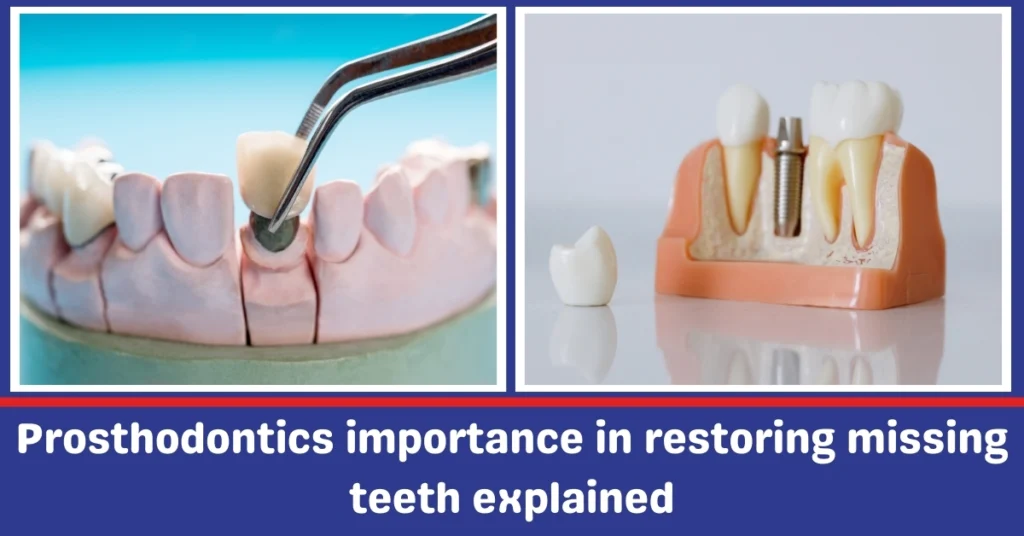
The specialty covers a wide range of treatments, each designed to restore function and aesthetics. Dental implants are among the most advanced solutions, offering a permanent replacement for both the root and crown of a tooth.
These implants integrate with the bone and provide stability comparable to natural teeth, allowing patients to eat, speak, and smile with confidence.
For those unable to afford implants, fixed dental bridges remain a strong alternative, filling the gap left by missing teeth while relying on surrounding natural teeth for support.
Another important offering in prosthodontics is complete dentures for individuals who have lost all their teeth.
In Pakistan, where older adults often suffer from total tooth loss due to gum disease or lack of preventive care, dentures provide an affordable way to restore basic function.
Partial dentures also help patients who still have some natural teeth but require replacements for several missing ones.
Modern prosthodontics combines functionality with aesthetics, ensuring that patients not only regain their ability to chew and speak but also restore their natural appearance.
In a country like Pakistan, where dental awareness is still growing, prosthodontics gives patients the chance to overcome the limitations of missing teeth and live healthier lives.
Economic Impact of Tooth Loss in Pakistan
The financial consequences of tooth loss in Pakistan are often overlooked, but they are significant. On the surface, people may assume that avoiding treatment saves money.
However, the opposite is true. Ignoring missing teeth leads to bone loss and further dental issues, which require more expensive and complex treatments later.
For example, replacing a missing tooth with a bridge or partial denture early can prevent the need for bone grafting and implant surgery later, which can cost three to five times more.
There is also the hidden economic burden caused by poor nutrition. Patients with missing teeth are less able to chew fresh fruits, vegetables, and protein-rich foods, which increases reliance on processed foods.
This dietary imbalance contributes to health conditions such as diabetes, obesity, and heart disease, which are already rising in Pakistan.
Managing these diseases results in much higher long-term healthcare costs compared to the cost of early prosthodontic treatment.
In addition, missing teeth have a social and professional impact. Appearance plays an important role in many industries, especially those requiring public interaction.
Job applicants with missing front teeth often feel self-conscious during interviews and may even face discrimination.
For Pakistan’s growing service sector, where presentation is key, tooth loss can reduce employment opportunities.
Therefore, investing in prosthodontics should be seen not just as a health expense, but as a way to preserve earning potential, avoid medical complications, and maintain a good quality of life.
Why Awareness Is Low in Pakistan
One of the major challenges in Pakistan is the low awareness about prosthodontics. Many people do not even know this specialty exists, and they assume that once a tooth is lost, it cannot be replaced.
This misconception is especially common in rural areas, where access to dental specialists is extremely limited. Another factor is cultural attitudes.
Older generations often accept tooth loss as a natural part of aging and resort to traditional solutions like removable dentures, without considering modern alternatives such as implants or bridges.
Cost is another significant barrier. Although treatments like implants and bridges are available in cities such as Karachi, Lahore, and Islamabad, many patients delay or avoid treatment due to the initial expense.
They fail to realize that untreated tooth loss leads to higher costs later, not only in dental treatments but also in general health expenses.
Lack of government initiatives to promote dental awareness also contributes to the issue.
Unlike in many developed countries, where oral health is included in preventive healthcare campaigns, Pakistan has limited educational programs on the importance of dental care.
As a result, awareness about prosthodontics remains confined to educated urban populations, while the majority of rural communities continue to suffer in silence.
Practical Advice for Pakistani Patients
For Pakistani patients dealing with missing teeth, the first and most important step is to consult a prosthodontist as early as possible.
The longer tooth loss is ignored, the more complicated and costly the treatment becomes. Patients should also consider the long-term benefits of treatment instead of focusing only on the immediate costs.
Dental implants, while more expensive initially, can last a lifetime with proper care and often prove to be the most cost-effective option over decades.
Bridges and dentures also provide reliable results when implants are not feasible, and choosing the right solution should be guided by a professional prosthodontist.
Maintaining oral hygiene is equally critical. Even after receiving prosthodontic treatment, brushing twice daily, flossing, and regular dental checkups are necessary to prevent further issues.
Many patients in Pakistan assume that artificial replacements do not require care, but this is a dangerous misconception.
Good oral hygiene protects the surrounding natural teeth, ensures the success of implants, and prolongs the life of bridges or dentures.
Patients should also choose reputable clinics that provide clear treatment plans and use proper sterilization methods.
Fear of dental treatment is another barrier, but it is important to know that modern prosthodontic procedures are safe and relatively painless.
By following these steps, Pakistani patients can restore their oral health and prevent long-term complications.
Prosthodontics in Urban vs. Rural Pakistan
The state of prosthodontics in Pakistan varies widely between urban and rural areas. In major cities such as Karachi, Lahore, and Islamabad, advanced treatments like implants, CAD/CAM-designed crowns, and cosmetic prosthodontics are readily available.
These urban centers have specialized clinics, trained prosthodontists, and access to modern dental labs.
Patients in cities are also more likely to be aware of treatment options and willing to invest in them.
For the growing middle class, prosthodontics has become an important part of maintaining health and appearance.
In contrast, rural areas face significant challenges. Access to prosthodontists is extremely limited, and many patients rely on general practitioners who may not have the advanced training needed for specialized treatments.
Removable dentures remain the most common solution due to their lower cost and availability, even though they do not provide the same comfort or function as implants or bridges.
Awareness levels are also low, and many rural patients continue to believe that tooth loss is permanent.
Outreach programs, mobile dental clinics, and government support are needed to bridge this gap.
Without efforts to extend prosthodontic care beyond urban centers, millions of Pakistanis will continue to live with the consequences of untreated tooth loss.
Role of Prosthodontics in Long-Term Health
The role of prosthodontics extends far beyond restoring a smile. It plays a vital role in maintaining long-term health and preventing serious complications.
Properly restored teeth allow patients to chew food effectively, which improves digestion and ensures that the body receives essential nutrients.
This reduces the risk of malnutrition and chronic illnesses that are linked to poor diets.
Prosthodontic treatment also prevents bone loss in the jaw, which helps preserve facial structure and reduces the need for costly surgical procedures in the future.
Another long-term benefit is the positive effect on mental health. Patients with missing teeth often suffer from low self-esteem, social withdrawal, and even depression.
Restoring teeth through prosthodontics has been shown to significantly improve confidence and overall mental well-being.
From a dental perspective, prosthodontic solutions protect the remaining natural teeth from excessive wear and shifting, reducing the likelihood of further tooth loss.
This creates a cycle of preservation rather than destruction. For Pakistan, where preventive healthcare is still underdeveloped, prosthodontics offers an opportunity to protect both oral and overall health for the long term.
The Way Forward for Pakistan
For Pakistan to fully benefit from prosthodontics, there needs to be a shift in awareness, accessibility, and affordability. Dental care must be recognized as an essential part of healthcare, not a luxury.
Public health campaigns should educate people about the dangers of ignoring missing teeth and the solutions available.
Schools can play an important role by including oral health education in their programs, teaching children early about the importance of preserving teeth and seeking professional care when needed.
Affordability is another key issue. Government support, insurance coverage, or subsidized dental programs can make prosthodontics accessible to a wider population.
Expanding training programs for prosthodontists and establishing clinics in rural areas will also help bridge the gap between urban and rural care.
Private clinics like Zainab Dental Clinics at Islamabad, PWD are already leading the way by offering advanced prosthodontic care, but more efforts are needed nationwide.
By investing in education, infrastructure, and accessibility, Pakistan can ensure that millions of people benefit from prosthodontics and live healthier, more confident lives.
Conclusion
Prosthodontics is a vital branch of dentistry that directly addresses the serious consequences of missing teeth.
In Pakistan, where oral health problems are widespread and many people delay treatment due to cost or lack of awareness, prosthodontics provides solutions that restore not only smiles but also overall health.
Missing teeth lead to difficulties in chewing, poor nutrition, speech problems, bone loss, and declining self-confidence.
By offering treatments such as implants, bridges, complete dentures, and partial dentures, prosthodontics ensures that patients regain essential functions and avoid long-term health complications.
For Pakistani patients, the importance of timely prosthodontic care cannot be overstated.
Early intervention prevents further bone damage, reduces future treatment costs, and allows individuals to live healthier, more productive lives.
At the same time, greater public awareness, better access in rural areas, and affordability initiatives are essential for expanding the reach of these treatments.
Prosthodontics should not be viewed as a luxury but as an essential healthcare service that supports nutrition, communication, and social confidence.
By prioritizing dental health today, patients in Pakistan can secure better health, stronger self-esteem, and a brighter future tomorrow.